Medical Practice · Oral Medicine & Pathology
Osteonecrosis
Less-invasive evaluation and management of osteonecrosis of the jaw (dead jaw bone), often linked to certain medications or prior radiation.
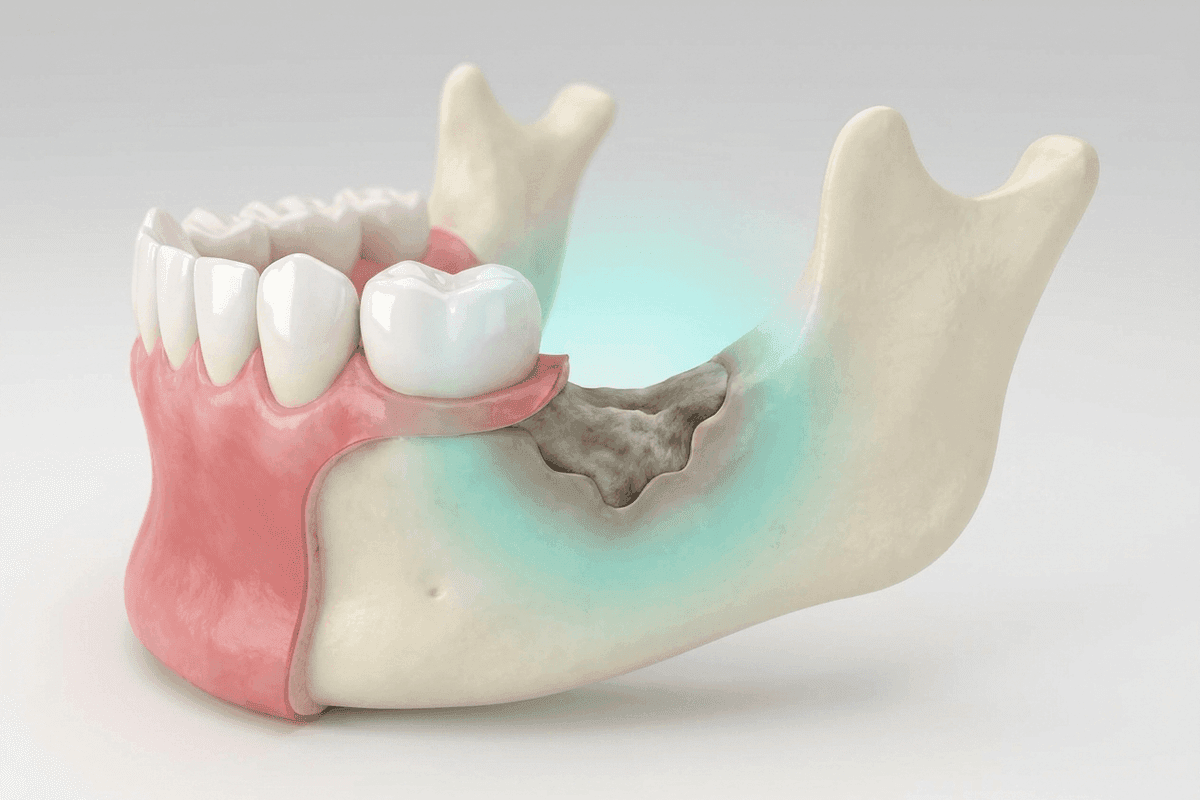
Osteonecrosis of the jaw — sometimes called "dead jaw bone" — occurs when a portion of the jawbone does not heal properly. Over time, this can cause the bone to weaken, become infected, and then necrotic (dead), usually resulting in exposed bone inside the mouth. This condition can happen for different reasons, but it is most associated with certain medications used to treat osteoporosis, cancer involving the bones, or following radiation therapy to the head and neck. Symptoms can include: • Pain or swelling in the jaw • Exposed bone that does not heal • Loose teeth • Drainage or infection • Difficulty chewing • Numbness or a heavy feeling in the jaw Treatment depends on how severe the condition is. The goal is to control pain and infection while preventing the area from worsening and helping the tissue heal as much as possible. A dentist will usually advise the following: • Antibiotics or antibacterial mouth rinses • Gentle cleaning of the area • Avoiding irritation or trauma to the jaw • Monitoring the area closely • In some cases, surgery to remove unhealthy bone Our medical practice specializes in less invasive treatment to slow the spread of osteonecrosis, reduce the risk of further complications, and potentially resolve the problem. If you feel that this applies to you, please contact the office so we can schedule a consultation for you. It is important to understand that healing can take time, and treatment is often focused on managing the condition and preventing progression.
Also in oral medicine & pathology
Related services
Oral Pathology
Diagnosis and biopsy of oral lesions — both routine and concerning.
Oral Cancer Screening
Visual and tactile examination for soft-tissue lesions and early signs of oral malignancy.
Biopsies
Soft-tissue and oral lesion biopsies, performed in-office with pathology turnaround in days.
The Oncology Journey
Pre-op, treatment, and post-op dental care for patients facing cancer, coordinated with your oncology team from first consultation through restoring your smile.
Custom Radiation Shields
Custom oral radiation shields and positioning stents that protect healthy tissue during head and neck radiation therapy.