Dental Practice · Periodontal & Surgical
Alveoloplasty
Surgical smoothing and reshaping of the bony ridge after extractions.
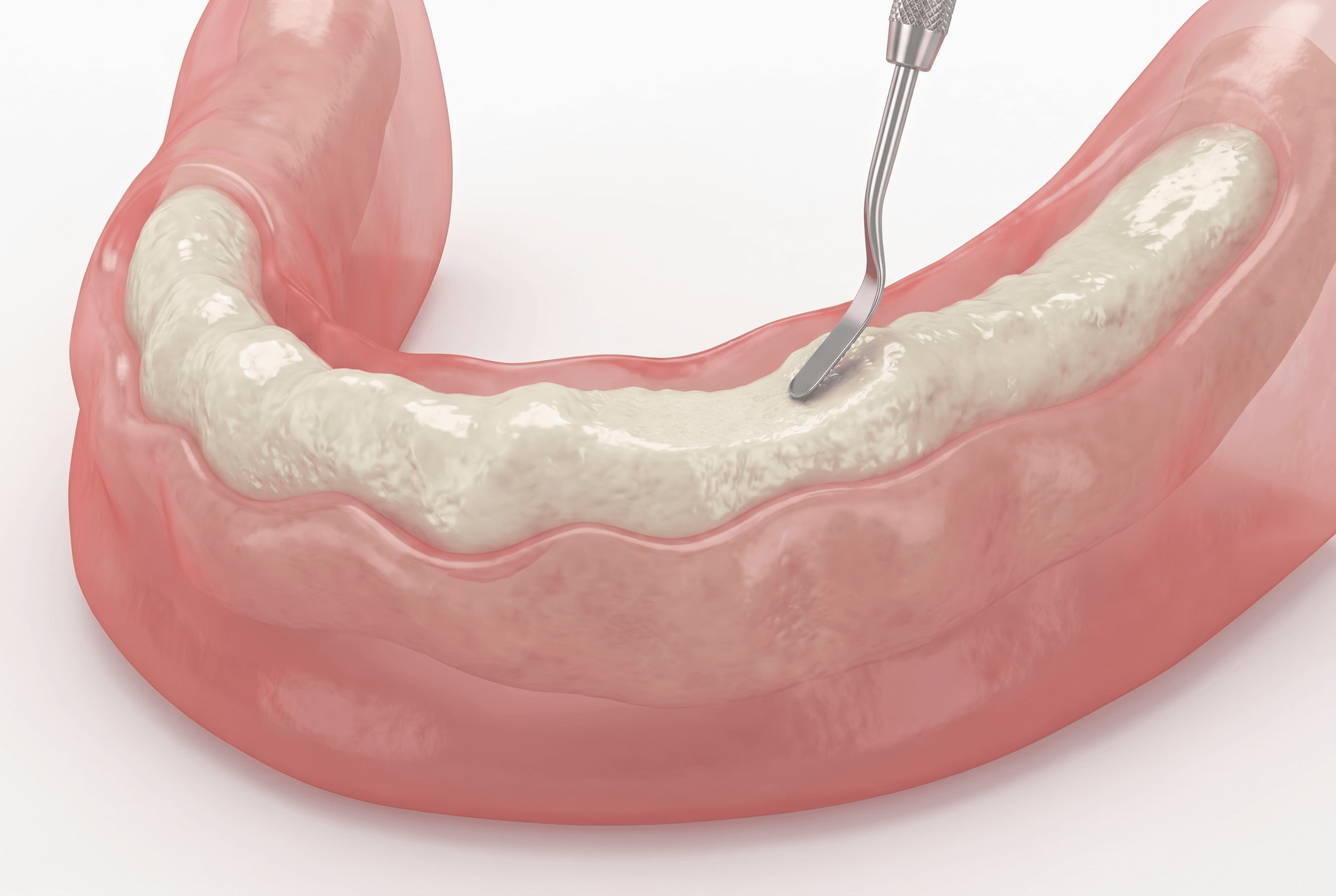
After teeth are extracted, the bone that supported them does not heal in a smooth, even contour on its own. Sharp ridges, bony projections, and irregular undercuts are common, particularly after multiple extractions in a row, or after teeth that were already compromised by bone loss or infection. That uneven ridge creates problems: pressure points under a denture that cause pain and sores, poor prosthesis stability, and, in some cases, discomfort even without a prosthesis. Alveoloplasty reshapes and smooths the bony ridge at the time of extraction, removing sharp peaks, filling in undercuts, and contouring the bone to a form that heals with a smooth, regular shape. It is most commonly done at the same appointment as multiple extractions, before the tissue is sutured closed, while the surgical site is already open. Adding alveoloplasty at that stage adds minimal time and healing burden compared to the significant benefit it provides. For patients receiving an immediate denture — one placed the same day as the extractions — alveoloplasty is particularly important. The denture is made in advance using pre-extraction impressions, and the fit depends on the ridge conforming reasonably well to what the lab anticipated. Contouring the bone at extraction improves how the immediate denture seats and reduces the number of pressure-point adjustments needed in the weeks that follow. Alveoloplasty is also performed as a separate procedure in patients who have already healed after prior extractions but whose ridge shape is incompatible with a well-fitting prosthesis. This is a less common scenario, but it is an option when the situation warrants it. Most patients benefit most from addressing it at the time of extraction.
Also in periodontal & surgical
Related services
Periodontal Treatment
Active treatment of gum disease — including laser-assisted therapy where indicated.
Crown Lengthening
Surgical exposure of additional tooth structure for restorative or cosmetic reasons.
Gingivectomy
Soft-tissue contouring for periodontal pockets, hyperplasia, or cosmetic shaping.
Frenectomy
Release of restrictive frenum attachments: lip-tie, tongue-tie, or labial frenum.