Dental Practice · Endodontics
Apicoectomy
Surgical endodontic procedure to save a tooth when conventional retreatment isn't viable.
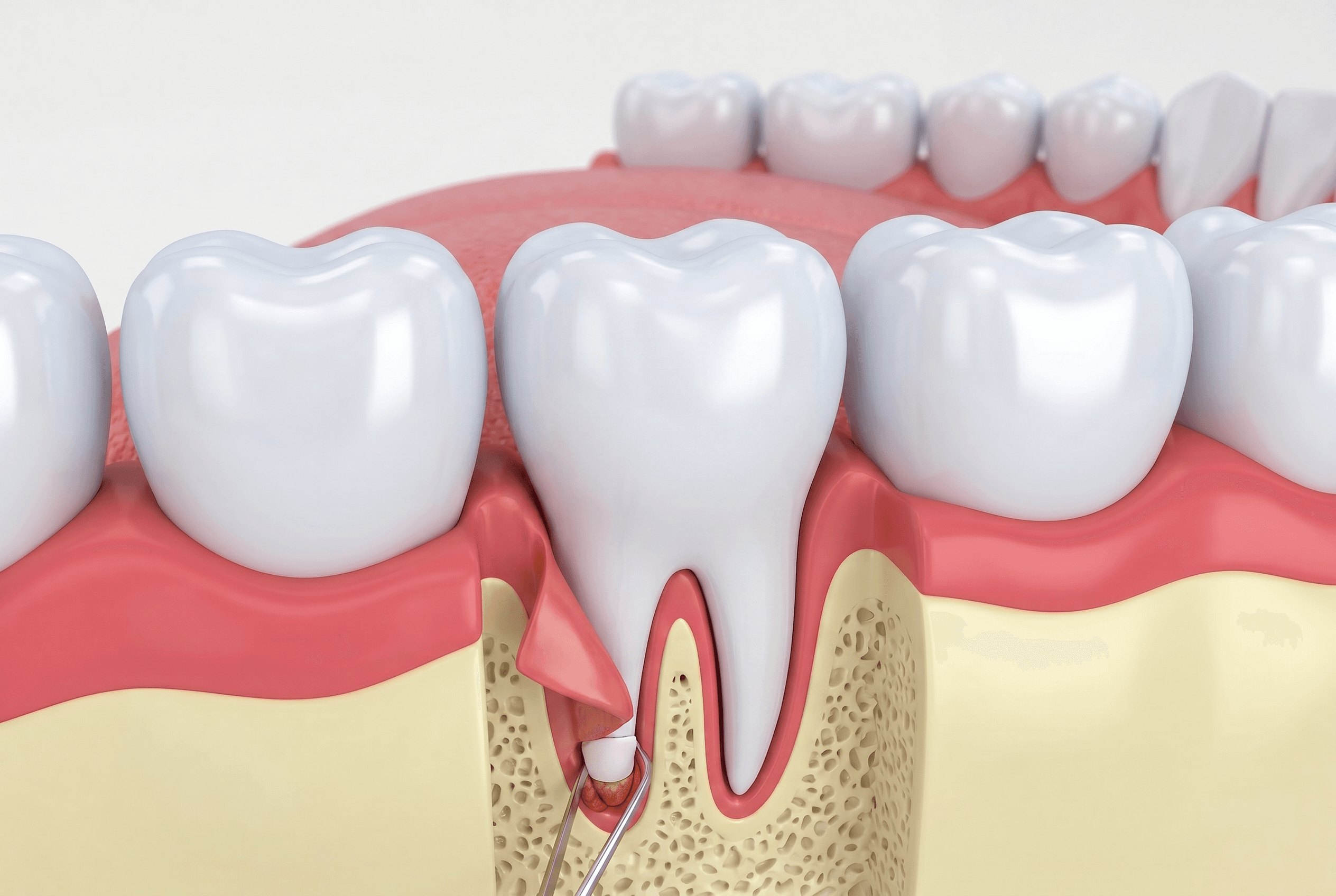
Sometimes a root canal that was completed correctly, years or decades ago, develops new problems at the root tip: residual infection, a cyst that has formed around the apex, or a canal that cannot be reached from above because of a post or a well-fitting crown that would be difficult to remove and replace. In those cases, the surgical approach is to address the problem from the other direction: through the gum and bone rather than through the crown of the tooth. An apicoectomy (surgical endodontic treatment) removes the tip of the root and the surrounding infected tissue, then seals the canal from the apex to prevent reinfection. The access is made through a small flap in the gum tissue, a small opening in the overlying bone, and the root tip is removed with a precise amount of the root length to eliminate the source of the problem. A retrograde filling material seals the end of the canal. The procedure is done under local anesthesia in our office. Post-operative swelling and some discomfort for a few days are typical; most patients are comfortable with over-the-counter analgesics and return to normal activity quickly. Sutures are removed at a follow-up appointment within a week to ten days. Not all failing root canals are best managed surgically. Retreatment through the tooth remains the better option in many cases. We evaluate the anatomy with imaging before recommending a direction, and we do not default to surgery when retreatment is a more conservative and equally appropriate choice.