Dental Practice · Oral Surgery
Bone Grafting
Site preservation and ridge augmentation to support future implant placement.
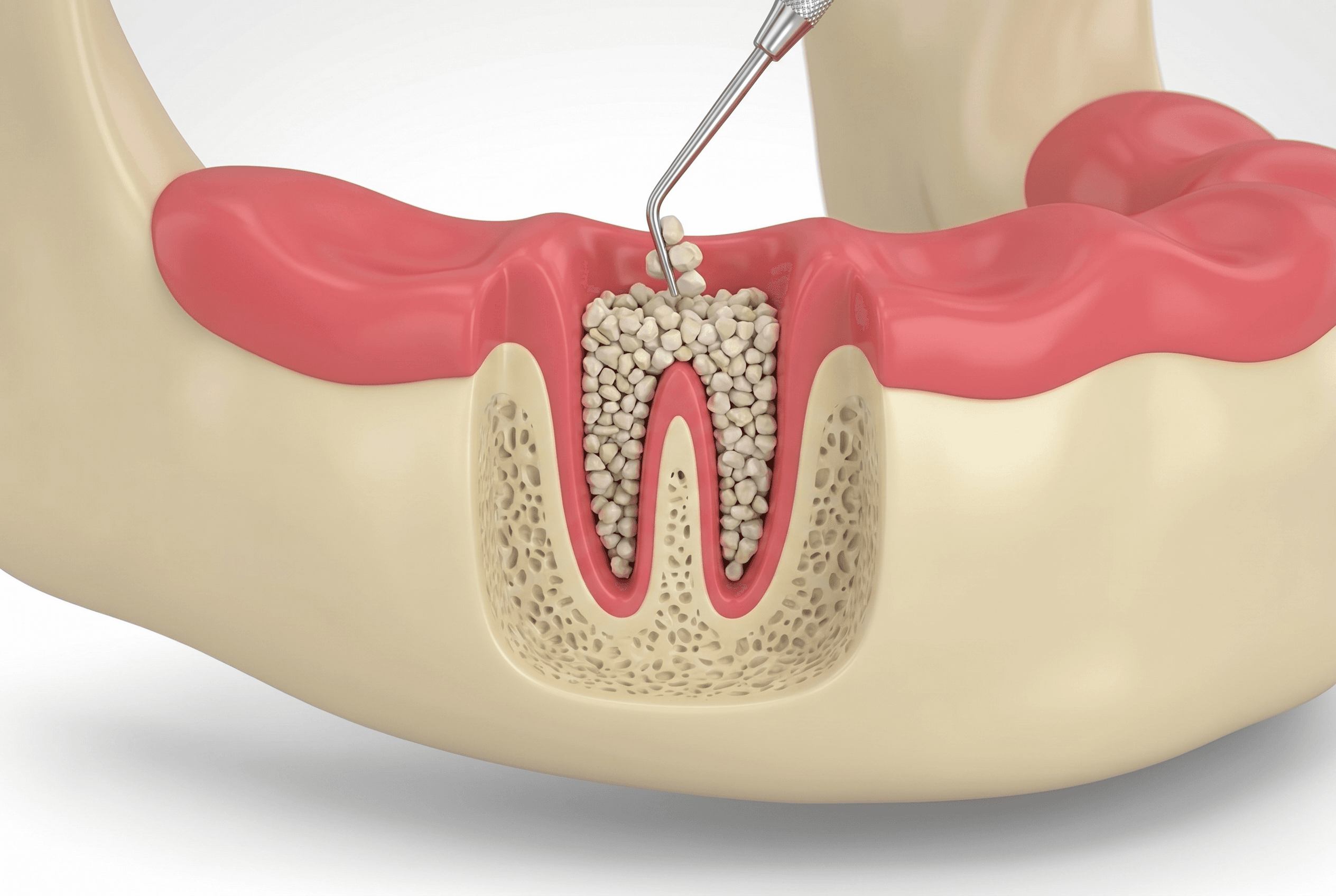
When a tooth is removed, the bone that surrounded the root begins to resorb. Without a tooth root transmitting bite forces into the bone, the body's metabolic activity reduces bone volume. Within six to twelve months of an extraction, a significant percentage of the ridge width and height can be lost — not enough bone for an implant, a ridge shape that makes denture fit difficult, and a cosmetic contour change visible at the gumline. A socket preservation graft placed at the time of extraction substantially reduces this resorption. The graft material — a combination of processed bone graft material and, when indicated, platelet-rich fibrin from your own blood — fills the socket, maintains the three-dimensional volume of the site, and provides a scaffold for the body's own bone-forming cells to repopulate the space. Over three to four months, the graft integrates and matures into bone that can support an implant or a stable prosthesis. Grafting at extraction is considerably simpler than attempting ridge augmentation later. The socket is already prepared, the surrounding bone walls are intact, and the healing starts immediately. Waiting until bone loss has already occurred means a more complex surgical procedure, a longer treatment timeline, and a less predictable outcome. We also perform more extensive ridge augmentation procedures for patients who present with bone deficiency from previous extractions, severe periodontal bone loss, or trauma — cases where the extraction socket has long closed and the grafting must be done as a separate surgical procedure.