Dental Practice · Restorative Dentistry
Composite Fillings
Tooth-colored composite restorations placed to halt decay and restore tooth function.
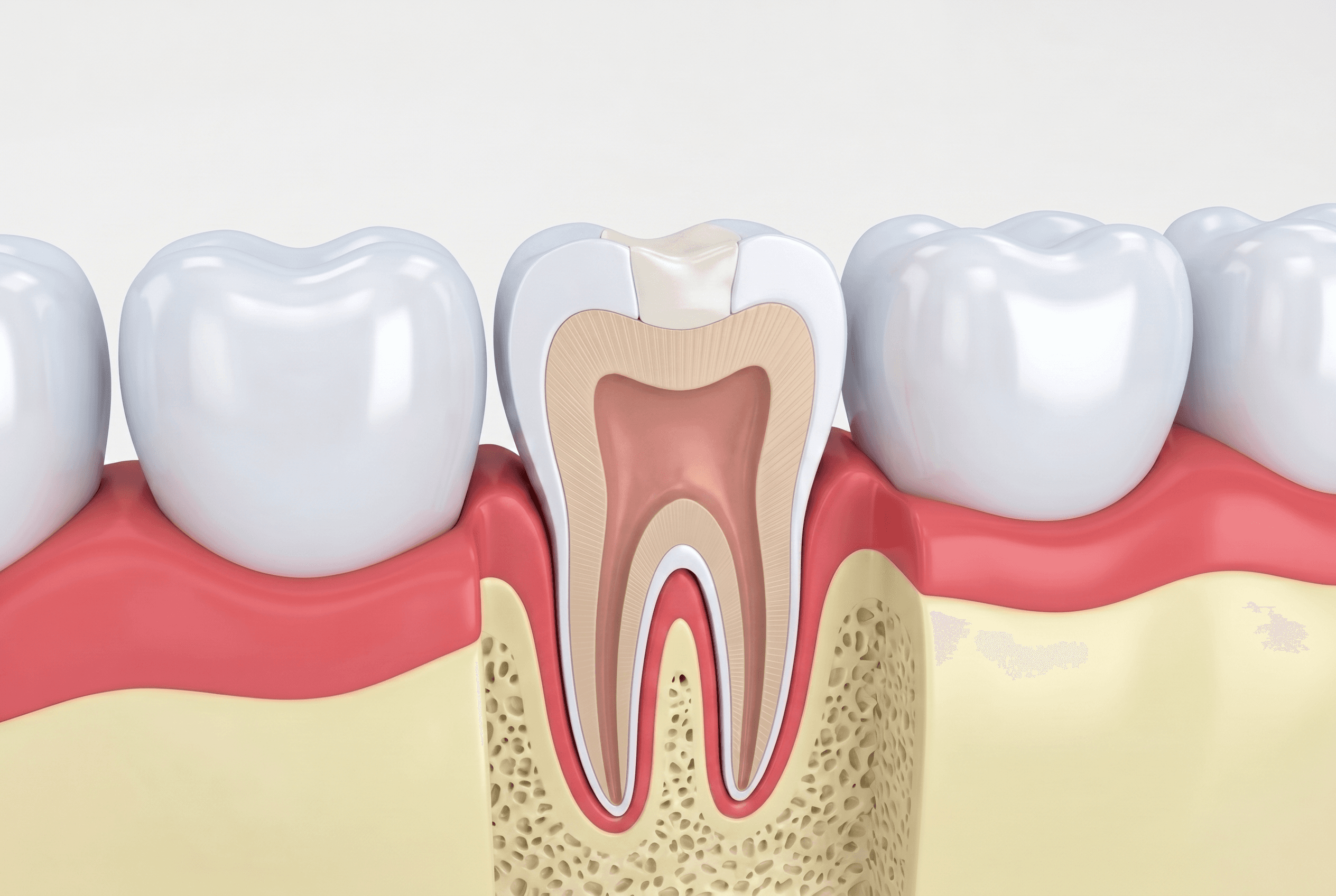
When a tooth has decay, our job is to stop it before it spreads, then restore the tooth so you can chew, smile, and forget about it. The decayed tissue is removed, the cavity is cleaned, and a tooth-colored resin is bonded into place, shaped to restore the original contour of the tooth and polished to match the natural enamel around it. Done well, a composite filling is indistinguishable from the tooth it repairs. The bonding mechanism matters. Modern adhesive composites form a chemical and mechanical bond with tooth structure, which means they reinforce what remains rather than just filling a void. A well-placed composite filling seals the cavity margin against re-contamination, which is what determines long-term durability. We place all direct restorations under rubber dam isolation — the moisture control this provides at the bonding step is the primary determinant of how long the filling lasts. We use composite for the full range of direct restorations: small cavities in posterior teeth, interproximal decay in both anterior and posterior teeth, chipped or fractured anterior teeth, and conservative restorations where tooth structure needs to be preserved. Composite is also used to replace deteriorating amalgam restorations when the indication supports it. What to expect: the appointment is completed in a single visit with local anesthesia. Some sensitivity to hot and cold in the days following placement is common and resolves as the tooth settles. We check your bite before you leave; if something feels off after the anesthetic wears off, call and we will adjust it. We do not claim a composite filling lasts forever. With proper home care and regular maintenance visits, a decade or more of service is a realistic expectation. Fillings at high-stress sites, molar contacts and areas subject to heavy bite force, are monitored at every hygiene visit.
Also in restorative dentistry
Related services
Onlays
Custom "partial crown" restorations that rebuild damaged cusps and protect the tooth while preserving healthy structure.
Direct Composite Veneers
Esthetic-focused composite veneers placed in a single visit. Conservative and reversible.
Porcelain Veneers
Custom-shaped porcelain shells that change a smile with minimal reduction of the underlying teeth.
Crowns & Bridges
Full-coverage restorations and multi-tooth bridges that restore function and protect the tooth.
Dentures & Partial Dentures
Full and partial removable prosthetics, including immediate dentures.
Teeth Whitening
In-office and at-home whitening, including deep-bleaching for stubborn cases.