Dental Practice · Restorative Dentistry
Dentures & Partial Dentures
Full and partial removable prosthetics, including immediate dentures.
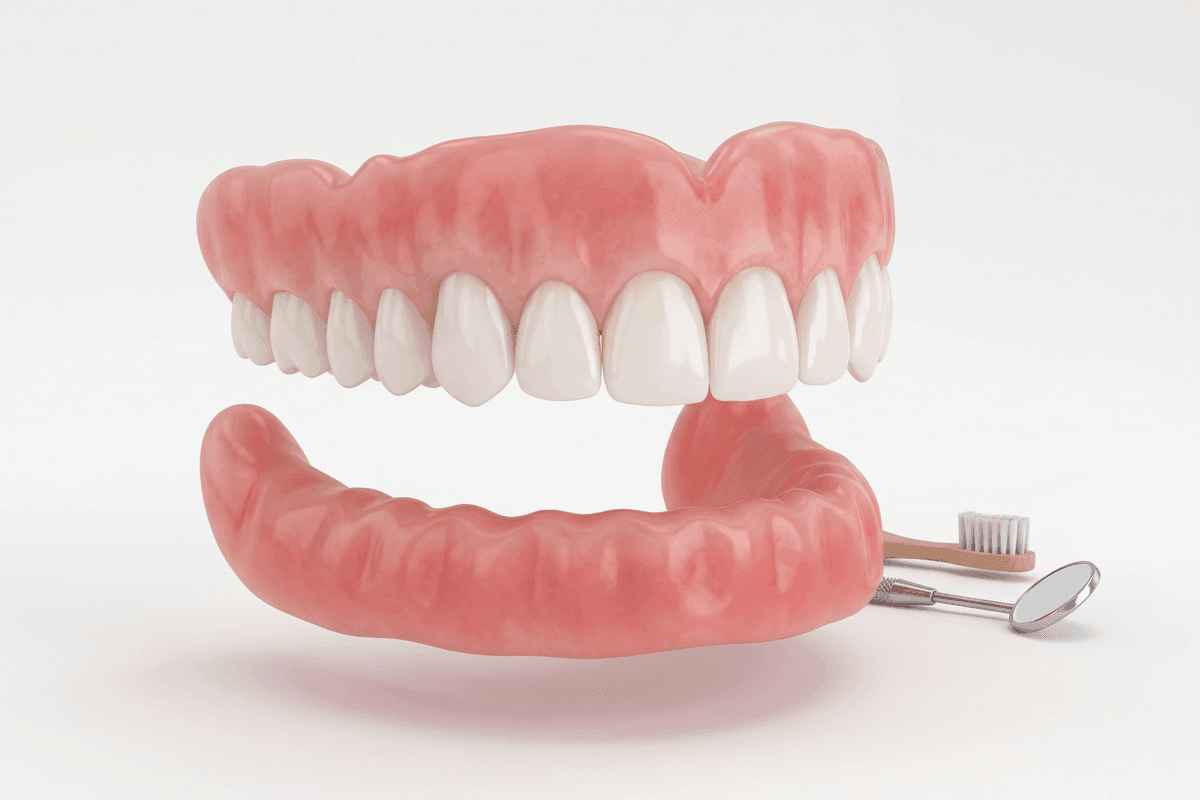
Losing teeth changes more than appearance. It changes how you eat, how you speak, and over time, how the underlying bone behaves. Dentures address those changes with a removable prosthesis custom-made to fit your ridge and replicate natural tooth form. When well-made and properly fitted, they restore chewing function and support the facial structure that the teeth were maintaining.
A conventional full denture is fabricated after the extraction sites have healed and the ridge has remodeled — typically four to six weeks after extractions. This timeline allows the denture to be fitted to stable tissue, which means better initial fit and less need for early relining. The process involves several appointments: impressions, bite registration, a try-in with the teeth set in wax where you approve the look before final processing, and the delivery appointment.
Immediate dentures are made before the extractions occur and the denture is placed at the same appointment as the extractions. The patient leaves without a gap in their smile, which is the primary advantage. The trade-off is that the tissue continues to remodel for months after extraction, which means the immediate denture will loosen and require relining as the ridge changes shape. Most patients with immediate dentures need a reline within the first year.
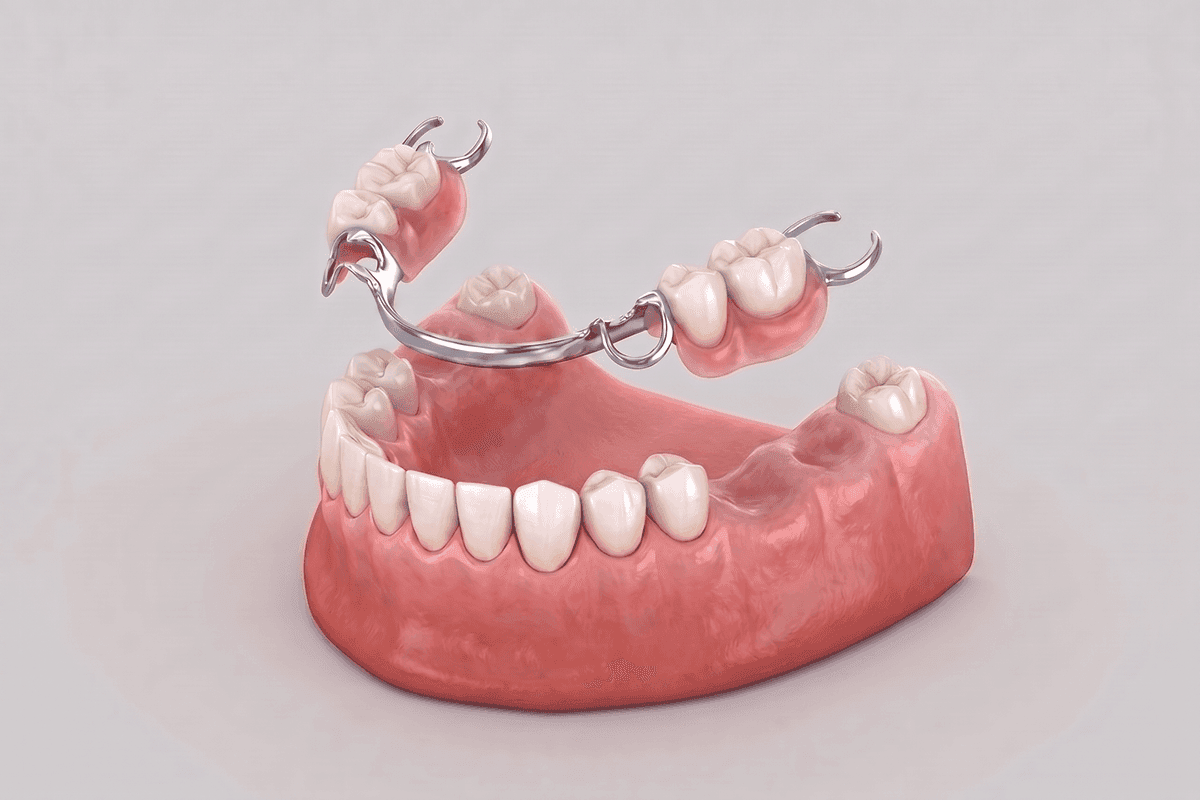
Partial dentures replace several missing teeth in an arch where natural teeth remain. A framework of metal or flexible resin clasps onto the remaining teeth for retention. Partial dentures prevent the remaining teeth from drifting into the gap and restore chewing balance across the arch.
For patients who want greater stability and retention than a conventional denture provides, implant-retained overdentures attach to implants placed in the jaw. The implants provide anchorage that prevents the prosthesis from moving during function. For patients who find conventional dentures unreliable, this is a meaningful quality-of-life improvement.
Also in restorative dentistry
Related services
Composite Fillings
Tooth-colored composite restorations placed to halt decay and restore tooth function.
Onlays
Custom "partial crown" restorations that rebuild damaged cusps and protect the tooth while preserving healthy structure.
Direct Composite Veneers
Esthetic-focused composite veneers placed in a single visit. Conservative and reversible.
Porcelain Veneers
Custom-shaped porcelain shells that change a smile with minimal reduction of the underlying teeth.
Crowns & Bridges
Full-coverage restorations and multi-tooth bridges that restore function and protect the tooth.
Teeth Whitening
In-office and at-home whitening, including deep-bleaching for stubborn cases.